
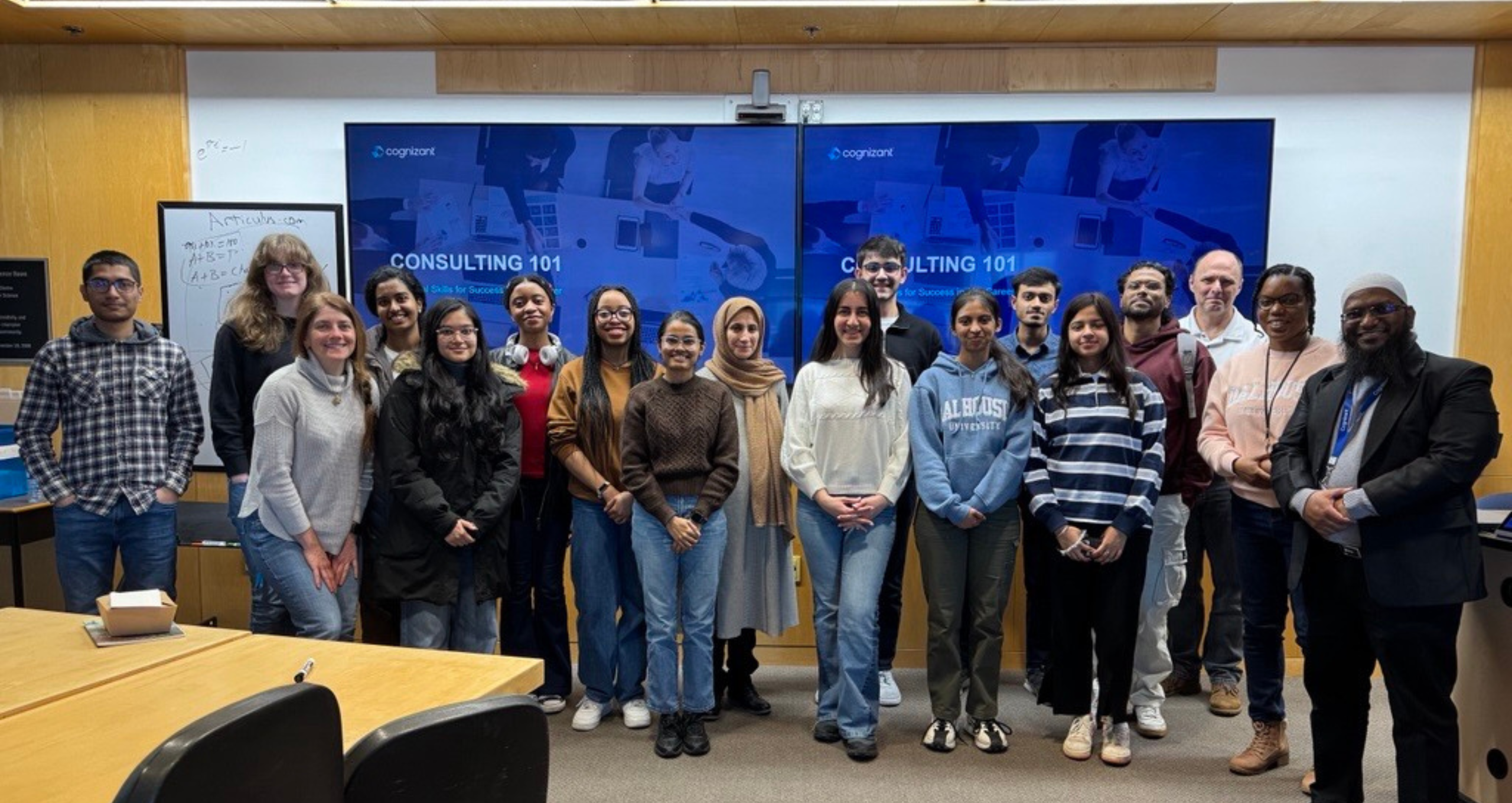

When Computer Science students Rachael and Sophie Eruokwu walked into the Goldberg Computer Science Building on March 22nd, 2025, the sisters had no idea what to expect.
“I had a very vague idea of consulting,” Rachael explains. “I didn’t really know what it was, especially within the tech sector or the tech field.”
Rachael and Sophie were heading to the Consulting 101 Workshop, hosted by ShiftKey and our partner, Cognizant. Cognizant is a global technology consulting firm with a strong reputation for supporting young talent. Since Cognizant opened its doors in Halifax, they have been a key supporter of ShiftKey Academy UP, making it possible for students to better prepare for tech careers. However, this spring they wanted to try something different. They wanted to create a consulting workshop.
“Cognizant has expressed that they are very interested in supporting programming that can help the next generation of talent find job opportunities. And of course, that requires the next generation to develop the skills necessary in order to access those opportunities,” explains Kewoba Carter, who leads Industry Engagement initiatives at ShiftKey. “So them coming in was something that aligned with not just ShiftKey, but with the Faculty of Computer Science’s vision of preparing students and their career development.”
Many students, like the Eruokwu sisters, convened from across campus to learn about consulting and how to apply it to their studies, co-ops, and future employment.
One of the workshop’s facilitators was Kevin Heinz, the Senior Director of Global Sales Transformation, who volunteered to come to Halifax on behalf of Cognizant. Heinz, who travelled from Los Angeles, had never been to Halifax before and was more than excited to deliver the session to Nova Scotia’s post-secondary students.
“It’s something that our team had been looking to do…taking our knowledge and experience and just seeing what we can do to support the local communities of people that should possibly be in careers and technology,” he says.
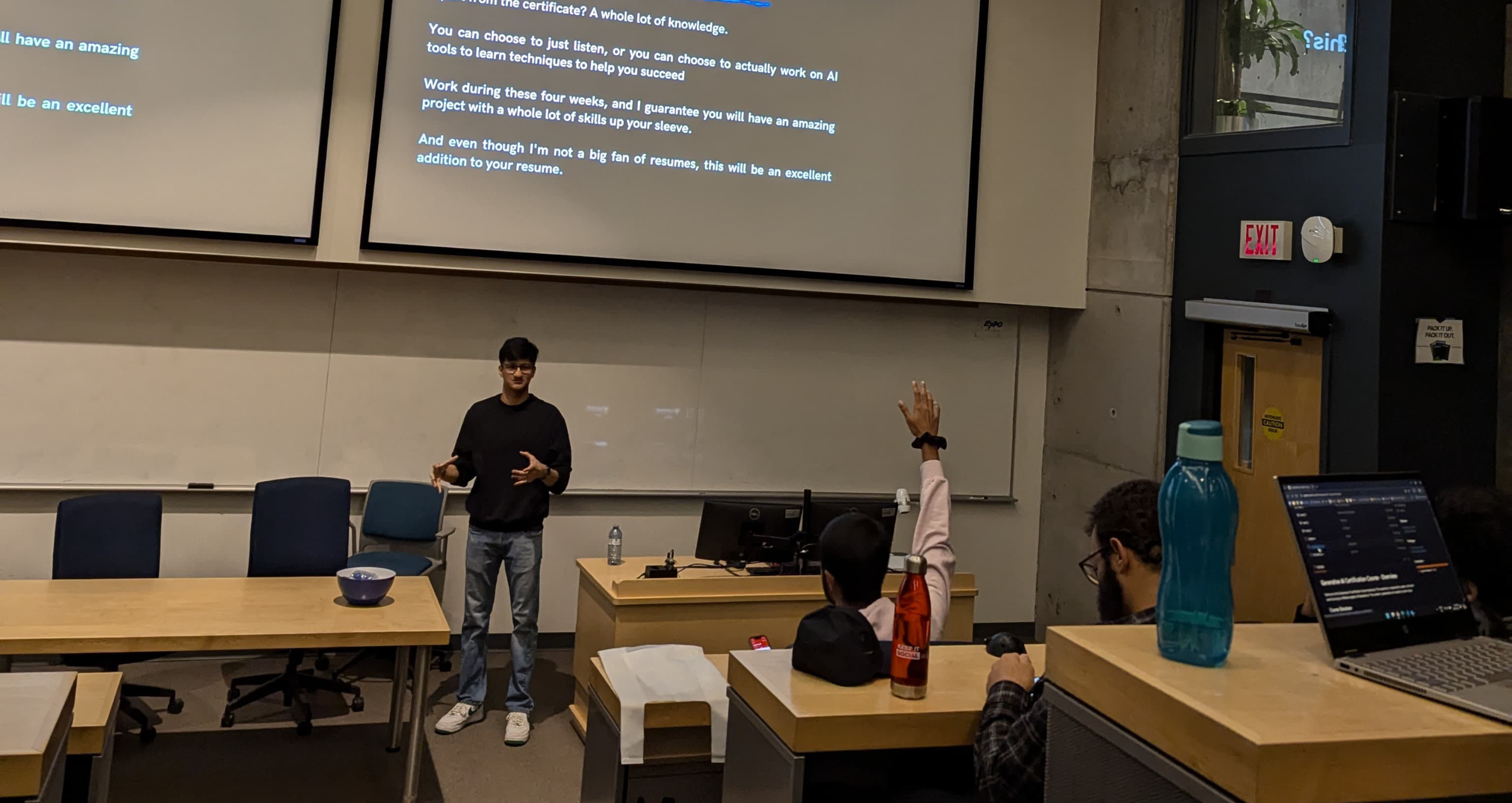
Heinz was joined by Mohammad Haqqani, a Strategic Learning Business Partner, at Cognizant’s Halifax office. Together, they created a workshop that was both informative and engaging, providing an interactive experience for the students in attendance.
For one activity, Heinz and Haqqani divided the students into groups to learn how to collaborate on multiple issues, building understanding about different perspectives and working together to “share ideas in ways that are interesting for people and relevant,” according to Heinz. “I think that worked well. I saw quite a bit of engagement.”
Although Heinz had aimed to create an appealing presentation, he was still pleasantly surprised by the students’ excitement and questions. “The energy and the interest were appreciated even more than I expected, and I found I enjoyed the day,” he explains.
The Eruokwu sisters were riveted, and Heinz’s and Haqqani’s methods of teaching changed what they thought about consulting.
“They let us see that it was more about listening and how to really use listening skills,” Sophie describes. “How to apply that to really analyze what your client wants and the possibilities that can give them without just maybe picking one thing they said and [saying] “Oh this is my suggestion. Your problem is solved.””
Rachael thought the same.
“Before coming to this workshop, basically my idea of consulting was just like kind of an advisor, but I feel like the way [Heinz and Haqqani] taught it, they kind of showed us that it was way more than that,” she says. “It’s more just learning, getting to know your clients and being more engaged rather than just advising and the one-sided type of interaction. So I thought it was really cool how they made it. It was super engaging.”
Carter was also impressed with their presentation and liked how Heinz and Haqqani had an open discussion to converse with students.
“I liked that the presentation was structured to give students an idea of how to introduce consulting in the most basic form,” she says. “So that it was what they were allowed to use examples that were very true to life to sort of figure out what a consultant does, and what are the steps involved.”
For Rachael, the presentation completely changed her views on consulting.
“Consultants have so many more roles than just an advisor. They even help the client identify their problems, to make the process easier. They help make business processes more efficient, so they play a lot of roles” she explains.
The event also helped students discover valuable skills that they can use in academics, the workplace, and their personal lives. This was something that Heinz wanted students to realize: that they could use consulting skills every day.
“Consulting really is about connecting with people, trying to understand them, and finding a way to see if you can relate with them. Not in any manipulative way, but taking your creativity, your experience through anything you’ve done in life and finding ways to help a client think about a way forward to maybe see things differently,” he says.
Learning how to apply consulting in any job resonated with Rachael and Sophie. Rachael also realized that the skills she learned can be applicable in any scenario, not just in her future career.
“What I took away was that [consulting can] provide you with very transferable skills, so especially, skills that are very essential in the workplace, in the classroom, [and] group projects. I feel like even if I don’t go on to become a consultant, I still learn how to work with different people and analyze their needs and what works best for a group as a whole, rather than just me as an individual,” she says.
Meanwhile, Sophie discovered that she could use the communication skills that she learned from Heinz and Haqqani and apply them to her dream career as a software developer.
“The stereotype is that you can’t talk to people, you just code usually,” she explains. “But adding the consultant aspect allows you to actually communicate to others with the product you’re making, not like you have a middleman, but actually you understand what’s going on and how to communicate with them and I really like that aspect.”
However, being a consultant has not left her mind.
“I found that prior to going, I didn’t really think of it as a career option. I was kind of gonna stick with more like development programming, but after going I’m now considering like that option and perhaps even for co-ops,” she continues.